Ultra Block Nano-Ceramic IR Window Film
These films have it all: superior performance, unmatched appearance, plus one of the strongest warranties in the industry. The Premium series includes traditional high-performance films; metal-free, non-reflective films; and top-quality high-tech Infrared (IR) and Ceramic films.
All Premium series films are made with premium-quality, “weatherable” dyed polyester for added fade resistance and extended longevity. Starting with the finest quality raw materials available, they are manufactured using today’s most advanced metallizing, laminating, and coating technology.
IR films, light shades from 70% to 86%.
Ultra Block Shades, Sizes, and Warranty
The dropdown lists Gray 50, Blue 70, Blue 80, Neutral 70, and Neutral 86. Choose a 36″, 60″, or 72″ width. Length options include 50′, 100′, or sold by the foot. Customers looking to buy Ultra Block IR window film, choose an Ultra Block architectural IR film roll, or order Ultra Block ceramic window film can select from these available options.
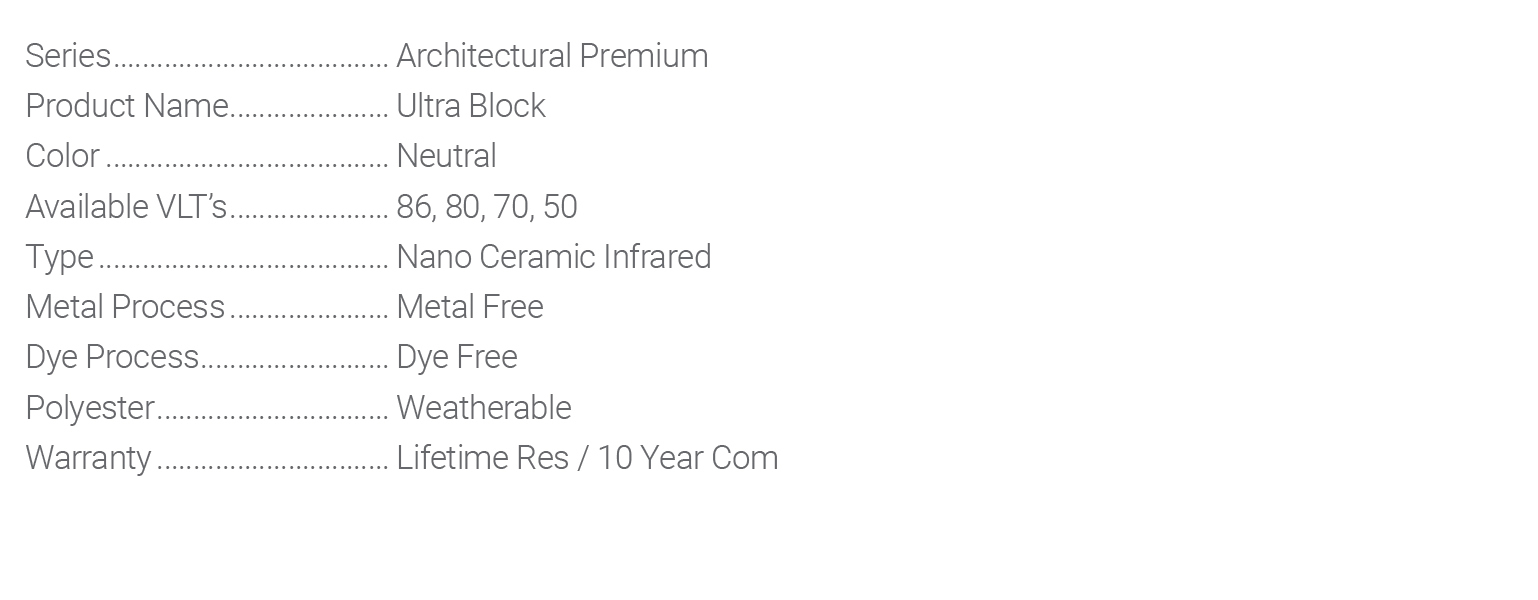
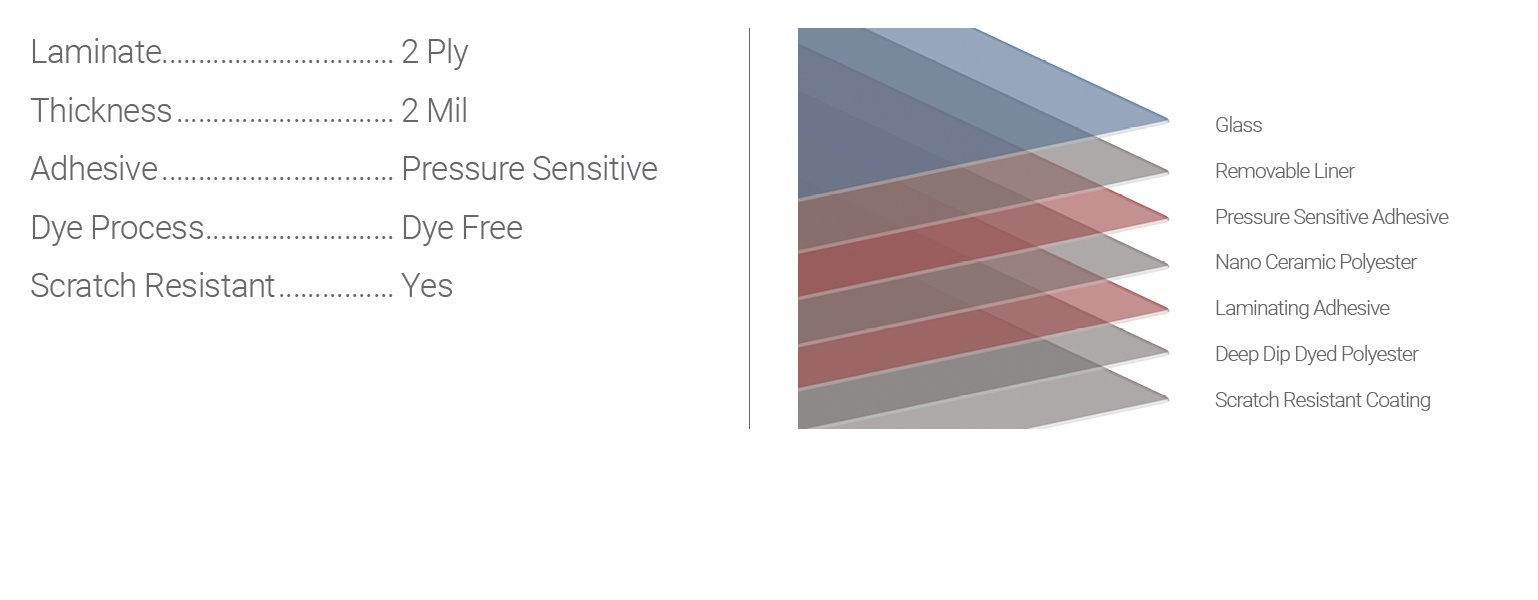
Quick Facts identify Ultra Block as neutral, nano-ceramic infrared film that is metal-free and dye-free, with weatherable polyester. Construction details list a 2-ply, 2-mil film with pressure-sensitive adhesive and a scratch-resistant coating. The listed warranty is Lifetime Residential / 10 Year Commercial. This light-shade infrared window film is available as metal-free IR film, including Gray 50% window film, Blue 70% and 80% window film, and Neutral 70% and 86% window film. Its specifications also list weatherable dyed polyester film.
Explore Premium architectural films, browse architectural window films, or review architectural warranty information.
Ultra Block Performance FAQs
Which charted shade has the highest infrared rejection?
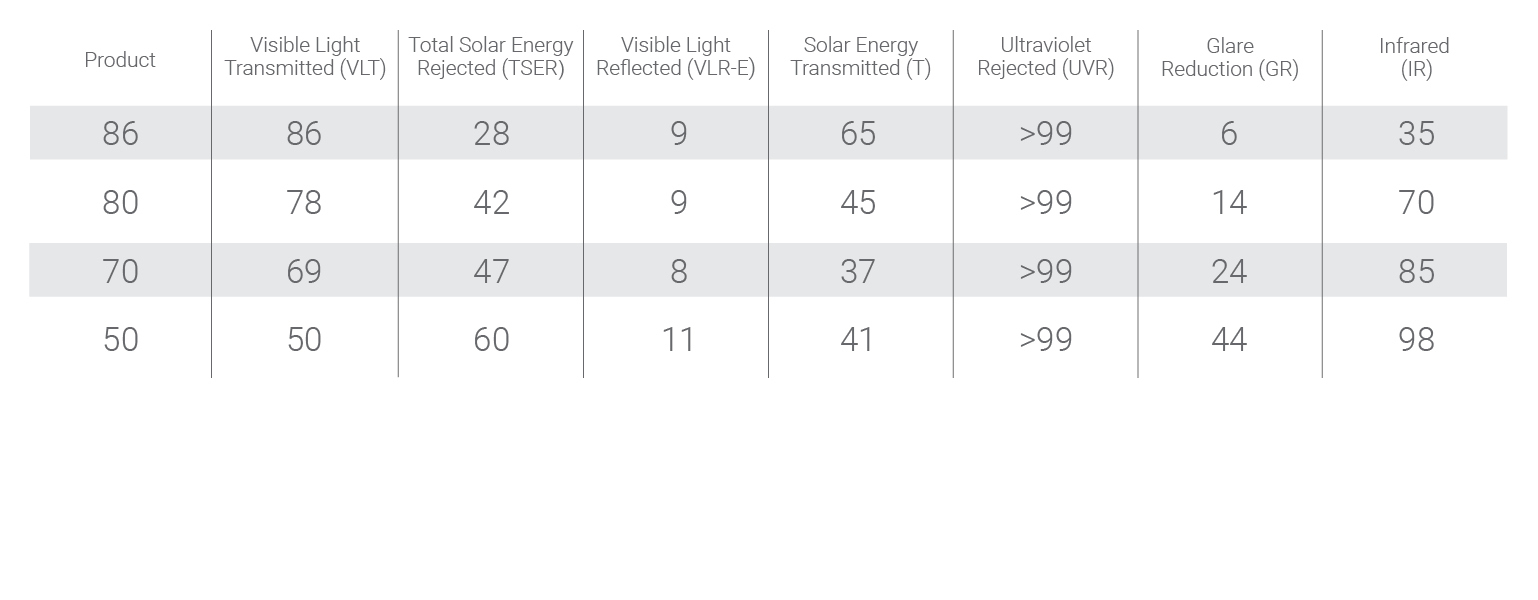
The 50 row has the highest listed infrared rejection, at 98%.
What measured VLT does the chart report for the 80 option?
The 80 row records 78% visible light transmission.
How much total solar energy rejection is listed for the 86 row?
The chart lists 28% total solar energy rejection for the 86 row.
How does visible light reflection compare between the 50 and 70 rows?
The 50 row lists 11% visible light reflection, while the 70 row lists 8%.
What solar energy transmission is shown for the 70 row?
The chart records 37% solar energy transmission for the 70 row.